
Gelco Chimney Sweep in Laguna Niguel: A Homeowner’s Guide
When a chimney technician says they’re installing a “liner,” the material specification behind that word – the manufacturer, the gauge, the alloy grade – is what separates a flue that lasts fifteen years from one that lasts thirty-five. Most homeowners never ask, and most estimates don’t say. In Laguna Niguel, where gas-log fireplaces and open wood-burning hearths share neighborhoods that see cool, damp winter mornings and long dry summers, the stuff inside the flue gets worked hard. Gelco is one of the professional product lines behind those systems, and knowing where it shows up in your chimney is worth ten minutes of your time. If you’d rather skip the research and get a straight answer from someone who handles these systems daily, call (855) 594-8044.
Key Takeaways
- Gelco is a supplier of chimney components, not a service company. The brand tells you what’s installed, not who installs it.
- The brand name on a liner or cap is a proxy for material grade, gauge, and warranty terms. It’s the single fastest way to judge an estimate.
- Professional-grade components meet standards that hardware-store parts often don’t, and inspectors notice the difference.
- Ask for the manufacturer and model in writing before work starts. Any contractor should be able to provide it.
- Our technicians have up to 12 years of experience specifying and installing DuraFlex, HeatShield, Gelco, Olympia Chimney, Famco, and Copperfield systems.
What does Gelco actually make, and where does it show up in a Laguna Niguel chimney?
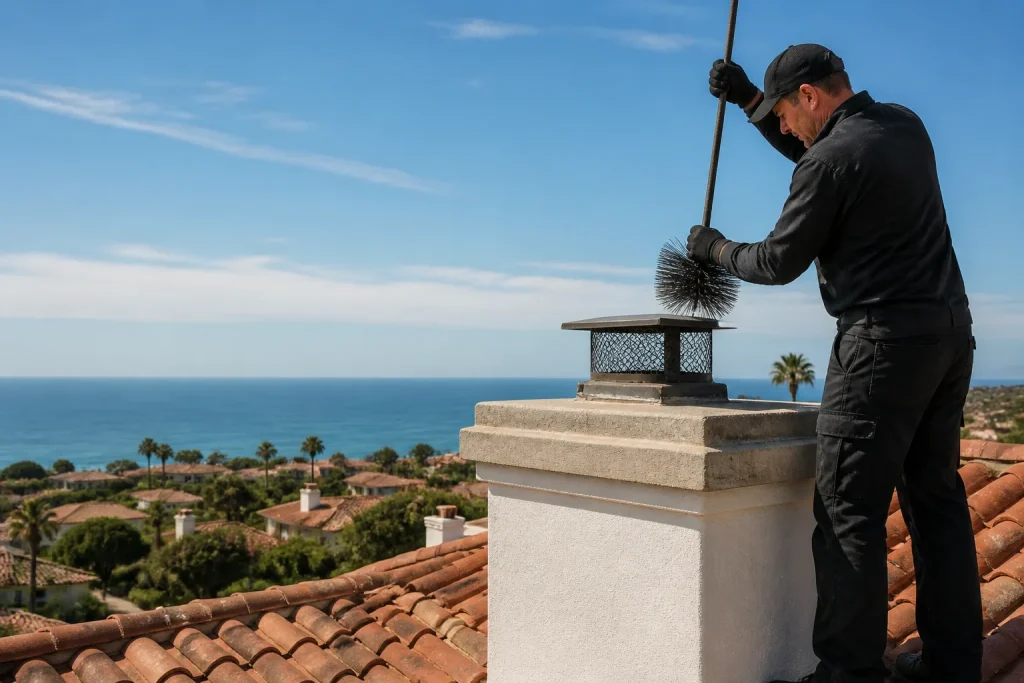
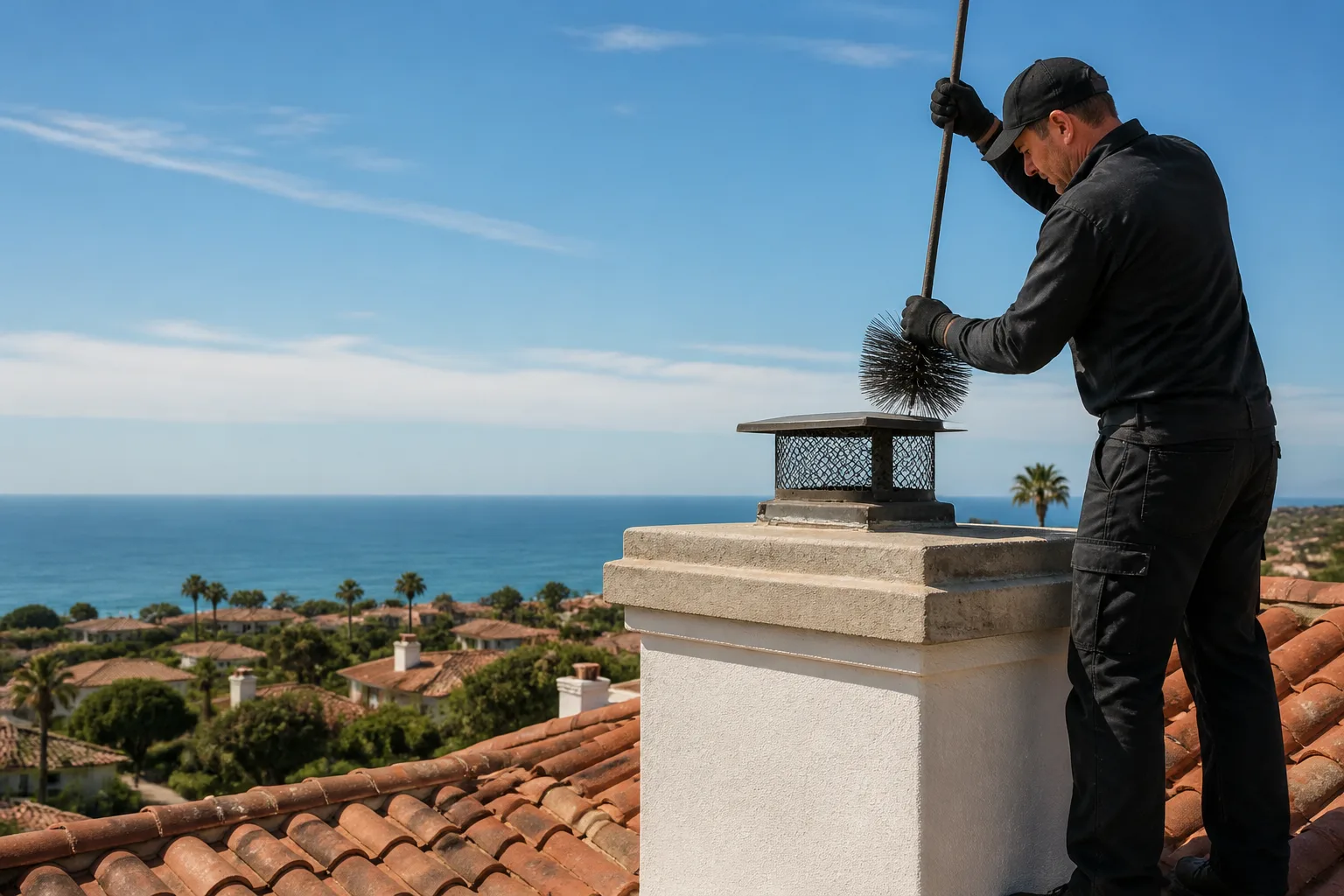
Gelco manufactures chimney components – the cap assemblies, crown materials, and related hardware that sit at the top of your chimney system. If your home in Laguna Niguel was built or updated in the last couple of decades, there’s a reasonable chance some of the metal at the top of your flue came from a supplier like Gelco or Famco. Chimney caps take the brunt of every season here, so material quality matters.
Here’s where Gelco and similar brands typically appear in a standard Laguna Niguel home:
- Chimney caps. The metal or mesh assembly that keeps rain, birds, and debris out of the flue. Cap quality directly affects how much water gets into your chimney chase during the occasional winter storm.
- Crown components. The concrete or metal cap at the very top of the masonry that sheds water away from the chimney. A cracked crown is the leading cause of water intrusion, and a supplier-grade crown lasts far longer than a field-fabricated patch.
- Liner connectors and adapters. The metal pieces that join your flue liner to the firebox or to the top plate. These are small parts that fail quietly if they’re undersized or the wrong alloy.
- Chase covers and top plates. The flat panel that seals the top of a framed chimney chase, common in homes with prefabricated fireplaces.
What Gelco doesn’t do is sweep your chimney or inspect it. That’s a service, and it’s the service side that determines whether your chimney is safe. A brand name on a cap is not a substitute for an annual chimney sweep and inspection. We work with these products daily, and we’re clear about one thing: the brand tells you what’s installed, not who installed it or whether it was installed correctly. Laguna Niguel homeowners who ask both questions get the best outcomes.
How do you read a chimney estimate for material specifications?
Most chimney estimates are written the same way: a line for labor, a line for “liner,” a total. That’s not enough information to judge quality. A professional estimate should specify the manufacturer, the model or product family, and the material grade for every component being installed. If it doesn’t, ask. A contractor who can’t tell you what brand of liner they’re using is a contractor who probably didn’t plan the job in detail.
Here’s how to read a chimney estimate in Laguna Niguel, line by line:
- Look for the brand name. “Stainless steel liner” is not a specification. “DuraFlex flexible liner, 316L alloy” is. The brand and the alloy grade are what you’re paying for.
- Check the gauge. Liner thickness is measured in gauge. Thicker isn’t always better, but the gauge should match the application – a wood-burning flue and a gas appliance flue require different specs.
- Ask about the cap and crown separately. These are the water-intrusion components, and they’re frequently where cheap materials get substituted. A Gelco or Famco cap is a known quantity, a no-name import isn’t.
- Confirm whether the estimate includes a camera inspection. You should see the inside of your flue before and after the work. Photo documentation is standard on a professional job.
- Read the warranty language. Manufacturer warranties on liners and caps run years, sometimes decades. Labor warranties are separate. Both should be in writing.
If the estimate is vague, ask for a written revision. That’s not being difficult, it’s being a smart consumer. We’ve seen plenty of Laguna Niguel homeowners get talked into a full reline when a chimney repair would have done the job. The specification in the estimate tells you which one is actually necessary.
Why does professional-grade material matter versus hardware-store components?
Hardware-store chimney parts exist, and they’re cheap. They’re also the reason so many Laguna Niguel chimneys need premature repair. Professional-grade components from suppliers like Gelco, Olympia Chimney, and Copperfield are built to standards that hardware-store parts often aren’t: consistent alloy composition, tested gauge tolerances, manufacturer-backed warranty terms, and compatibility with the rest of the system.
The difference shows up in three places:
- Durability. A properly specified stainless liner from a chimney-industry supplier has a predictable service life. An underspec’d liner may fail in a fraction of that time, and when it fails, it usually fails invisibly – inside the flue where you can’t see it.
- Warranty. Manufacturer warranties are only valid for the components the manufacturer sells. A hardware-store liner carries whatever warranty the store offers, which is often none. A professional-grade liner carries a manufacturer warranty that survives the job.
- Code compliance. Liner systems need to meet recognized standards. Inspectors and future buyers look for evidence of compliant materials. A hardware-store component that doesn’t meet the standard is a problem waiting to surface at resale.
We specify DuraFlex and HeatShield for a reason, and we stock Gelco and Famco components for caps and crowns because those are the materials the industry recognizes. HeatShield is worth a specific note: it’s a resurfacing system that can restore a deteriorating flue interior without a full liner replacement. Most companies don’t mention it. We do, because sometimes it’s the right answer and sometimes it isn’t, and the homeowner should know the option exists before they’re quoted a full reline.
What questions should you ask any contractor about materials?
You don’t need to be a chimney expert to ask a good question. You need five, and you need to write down the answers. Any legitimate company in Laguna Niguel should be comfortable answering all of them before work begins, and the ones that get defensive are telling you something.
- “What brand and model is the liner or cap you’re proposing?” Get this in writing on the estimate. If it’s not on paper, it’s not a specification, it’s a conversation.
- “What alloy grade and gauge is the liner?” Different applications need different specs. A professional should explain the reasoning without being asked twice.
- “Will you document the before-and-after condition with a camera?” You should see the inside of your flue on a screen before work begins and after it’s done. This is the single best protection against unnecessary work.
- “What’s the manufacturer warranty, and what’s the labor warranty?” Two different numbers, two different documents. Ask for both.
- “Does the installation meet NFPA 211 and California building code?” The National Fire Protection Association’s 211 standard governs chimney liner installation, and California building code adds local requirements. A qualified installer should be able to point to the specific provisions that apply to your job.
Here’s the honest part: we can’t cross-reference every detail of your specific system without seeing it. What we can do is explain which standard applies and why, and put the specification in the estimate before you commit. That’s the difference between a specialist and a generalist who grabbed a ladder. If you’re not sure whether the last company that worked on your chimney used the right materials, a standalone inspection is worth the call. Ask for one on its own, not bundled with a sale.
How do you cross-reference materials with NFPA 211 and California code?
NFPA 211 is the standard that governs most chimney liner installations in the U.S., and California’s building code layers on top of it. In practical terms, when a contractor proposes a liner or a repair, the specification should be traceable to that standard. That means the liner is listed for the type of appliance it’s serving, the installation method matches the manufacturer’s instructions, and any local requirements that apply to your home in Laguna Niguel have been checked.
What you can do without a code book:
- Ask the contractor to name the standard that governs the installation in plain terms. “NFPA 211 for liner installation” is a reasonable answer.
- Ask whether the local building department requires a permit for the scope of work. Most cities do for some chimney and flue work, so call your city’s building department and ask what applies to your project.
- Check that the manufacturer’s installation instructions come with the product documentation. A manufacturer’s installation guide is the recipe the installer is supposed to follow.
- Ask whether the final job will be inspected by the local authority. On permitted work, it usually is.
We work to these standards on every job because it’s not optional, and because a liner that isn’t compliant is a liability for the homeowner long after the technician leaves. If the last estimate you got didn’t mention a standard, a manufacturer, or a permit, that’s a signal worth acting on. An inspection is a standalone service. We’ll tell you what it needs, not what costs the most.
When should you call a professional?
Some chimney maintenance is genuinely a homeowner task – a visual check of the cap from the ground, a look at the firebox between fires, brushing ash off the hearth. The rest belongs to a trained professional, and a few situations call for it right now:
- You smell smoke inside the house when the fireplace is running, or you notice soot on the face of the firebox.
- Your chimney hasn’t been inspected in more than a year, or since the last time you burned wood.
- You can see cracked or spalling masonry on the chimney crown or the chase.
- A previous contractor recommended work you can’t verify – a full reline, a rebuild, a liner upgrade – without showing you the inside of the flue.
- You’ve had a chimney fire, even a small one you put out yourself.
The standard advice is an annual sweep and inspection for any chimney you use regularly. That’s not a sales pitch, it’s the baseline. A chimney with a blocked flue can send carbon monoxide into the house, and a chimney with a cracked crown can absorb water for years before it shows up as a repair bill. Both are cheaper to catch early. If a technician tells you something needs work, ask to see the camera footage. You’re entitled to see it. A photo report should be included on the job, not offered as an add-on.
If your fireplace needs attention beyond cleaning, our fireplace repair team handles the firebox, damper, and refractory side of the system. From the firebox to the cap, it’s one call.
Related services in Laguna Niguel
We handle the full life of a chimney system, from Laguna Niguel Chimney Sweep Pros through inspection, cleaning, repair, and cap and crown installation. If you’re comparing companies or comparing materials, we’re happy to walk you through a written specification.
The Bottom Line
Gelco is one of the product lines behind a well-built chimney system – caps, crown components, and hardware that sit at the top of the flue and take the worst of the weather. The brand name is useful because it points to a material grade you can verify, but it’s not the whole story. What matters most is the specification on your estimate, the standard the work is held to, and whether the person quoting you is willing to show you the inside of your own flue before recommending work. We use the same materials chimney professionals specify by name, we do inspections as a standalone service, and we’ll tell you when work can safely wait. Our technicians have up to 12 years of experience with DuraFlex, HeatShield, Gelco, Olympia Chimney, Famco, and Copperfield systems.
If you’re in Laguna Niguel and need help, Laguna Niguel Chimney Sweep Pros offers free estimates – call (855) 594-8044. We answer 24/7. Fast dispatch from 7am to 7pm, Sunday through Friday. The written estimate sets the final price, and you’ll see it before anyone touches your chimney.
Frequently Asked Questions
Gelco doesn’t perform chimney sweeps – it’s a supplier of chimney components like caps, crown materials, and hardware. “Gelco chimney sweep” is a phrase homeowners search when they’re looking for a sweep company that works with Gelco products. If you need a chimney sweep in Laguna Niguel, the service is performed by a technician and the product brand refers to the parts installed. Ask any company you hire which manufacturer’s components they use, and get it in writing. Call (855) 594-8044 for an exact quote – estimates are free.
A chimney sweep in Laguna Niguel typically runs a base rate for the cleaning plus inspection, and the price depends on the flue type, the level of buildup, and whether any repairs are needed. We can’t quote a number without seeing the system, and any company that quotes one over the phone is guessing. What we can say is that the estimate is free, the price is set per job by the written estimate, and you’ll see the flat price agreed before booking. Call (855) 594-8044 for an exact quote – estimates are free.
Maybe, but not always, and not until someone shows you why. A liner is necessary when the existing flue interior has deteriorated past the point where it can safely contain combustion, when the existing liner is the wrong size or material for the appliance, or when it’s failing inspection. Some flues can be restored with HeatShield resurfacing instead of a full liner replacement, which is a cost-saving option worth asking about. Nothing should be recommended without camera evidence you can see for yourself. Call (855) 594-8044 for an exact quote – estimates are free.
Creosote accumulates inside the flue with every wood fire, and when it reaches a thickness where it can ignite, a chimney fire becomes possible. A blocked or damaged flue can also allow carbon monoxide to enter the living space. Those are the two real risks, and they’re both invisible from outside the chimney. An annual sweep and inspection catches them early. If it’s been more than a year since your last inspection, book one. Call (855) 594-8044 for an exact quote – estimates are free.
Written by the team at Laguna Niguel Chimney Sweep Pros.
Need Chimney Cleaning Help?
Call Laguna Niguel Chimney Sweep Pros - the local pro we connect you with is licensed and insured, with free written estimates in Laguna Niguel.
(855) 594-8044