
Top Signs You Need Chimney Cleaning Service – Don’t Ignore These
The most dangerous chimney in Laguna Niguel usually isn’t the one with heavy creosote. It’s the decorative fireplace used twice a year that hasn’t been inspected since the previous owners moved out, because a lightly used flue feels like it can’t need service. Homeowners often assume a chimney tells you when it’s in trouble. In reality, the warning signs here show up as a faint smell in the living room, a stray feather on the hearth, or a streak of white on the exterior brick. We’d rather you know what to look for than take our word for it. If you’d rather skip the guesswork, call (855) 594-8044 and we’ll inspect it properly.
What Are the Real Signs You Need Chimney Cleaning Service?
The clearest signs you need a cleaning service fall into two groups: combustion-related signals and obstruction-related signals. Combustion signals come from what burned in the firebox. Obstruction signals come from what moved in, blew in, or fell apart above it. Knowing which group a symptom belongs to tells you whether the chimney needs a sweep, an inspection, or a wildlife call.
Combustion-related signs:
- An oily, smoky odor in the room even when the fireplace is cold. That smell is creosote and soot releasing volatiles into interior air, often on warm days when the pressure inside the house changes.
- Smoke staining above the firebox opening or across the face of the brick. It usually means the smoke isn’t clearing the flue efficiently and is rolling back into the room.
- A slow draw, where fire takes longer to catch and smoke drifts toward the room instead of rising cleanly.
- A black, gummy residue at the top of the firebox. That’s the early stage of creosote, and it’s easier to remove before it hardens into a glazed layer.
Obstruction-related signs:
- Scratching, flapping, or rustling sounds from the flue, especially at dawn or dusk.
- Debris falling into the firebox: twigs, leaves, nesting material, or soot clumps that don’t look like ash.
- A sudden reversal of draft, where smoke comes back into the room after the fire was burning fine minutes earlier.
In our experience across Laguna Niguel, the obstruction group is the more common call we handle, because chimneys here sit close to mature trees, canyon edges, and open ridgelines where birds and small animals find a warm, sheltered place to build.
Why a White Stain on the Exterior of Your Chimney Is More Urgent Than You Think
That chalky white powder or crust on the outside of the chimney is called efflorescence, and it means water is traveling through the masonry and pushing mineral salts to the surface as it evaporates. The stain itself is harmless. What it points to isn’t: moisture has found a path into the brickwork, and it will keep taking that path until the source is closed off. In Laguna Niguel’s mild, dry years, a lot of this damage builds slowly enough that nobody notices until a chunk of mortar washes loose or a brick face begins to flake.
Moisture migration matters because it does three things in sequence:
- It softens the mortar joints that hold the brick together.
- It reaches the interior flue, where wet masonry and soot don’t mix well and can accelerate deterioration of the flue lining.
- It finds its way back inside the house, showing up as a damp smell or a stain on the ceiling near the chase.
The exterior start of the problem is a crack in the crown or a missing or damaged cap. That’s why we install caps and crowns with manufacturer-sourced components from Famco and Olympia Chimney rather than field-fabricated pieces. A proper cap diverts water off the crown and keeps animals and debris out at the same time. If you see efflorescence, don’t wait for it to become an interior problem before booking a chimney repair assessment.
What About the “We Barely Use It” Fireplace?
Low use doesn’t mean low maintenance, it just means a different kind of buildup. A wood-burning fireplace used a handful of times a year doesn’t produce much creosote. What it does produce is a long, undisturbed stretch of time in which other things accumulate quietly. Empty flues are excellent real estate for birds and small mammals, and their nesting material is a serious fire hazard if the fireplace gets used before it’s cleared.
Infrequent use also means deterioration goes unnoticed for longer. A small crack in the mortar of the firebox, or a gap where the flue tile meets the crown, may take years to become a real problem, but it does become a problem. Soot and moisture settle together, and a flue liner that’s never been looked at can’t tell anyone it’s compromised. That’s the specific argument for an inspection as its own service, not just as a reason to book a sweep.
In our experience, the most useful thing we can do for a low-use chimney is to inspect the whole system and then tell the homeowner plainly what needs attention and what can safely wait a season or two. We’ll tell you what it needs, not what costs the most.
The Damper That Doesn’t Quite Close
A damper that doesn’t seat fully is one of the quietest signs of a problem, and it matters even in July. When the damper is closed, a properly seated plate holds a seal against the flue. When it’s worn, warped, or obstructed, you get a small gap. In Laguna Niguel, where evenings and mornings often bring a temperature swing and canyon-adjacent homes pull air through any opening the house will give it, that gap becomes a path for outside air, humidity, and sometimes the smell of the flue itself into the living room. Roughly the same path that lets cold air in during winter lets damp air in during summer, and damp air is what feeds the moisture problems described above.
What it feels like when you check it:
- Feel: with the fireplace cold, hold the back of your hand near the firebox opening with the damper closed. A steady draft means the seal is compromised.
- Sound: low airflow or a faint whistle at the damper frame when the house is under pressure from wind or exhaust fans.
- Sight: visible light through the damper plate from the firebox when the room is dark.
If the damper is stuck rather than just loose, don’t force it. Dampers live right next to the metal that takes the most heat in the whole chimney, and forcing a rusted mechanism can dislodge more than you want to touch. This is a good point to bring in a professional.
What You Can Check From the Ground Before You Call Anyone
You can learn a lot about your chimney without climbing anything. Walk to the far side of the yard, look up, and check four things. It takes about two minutes and it will tell you more than any inspection report you haven’t read yet.
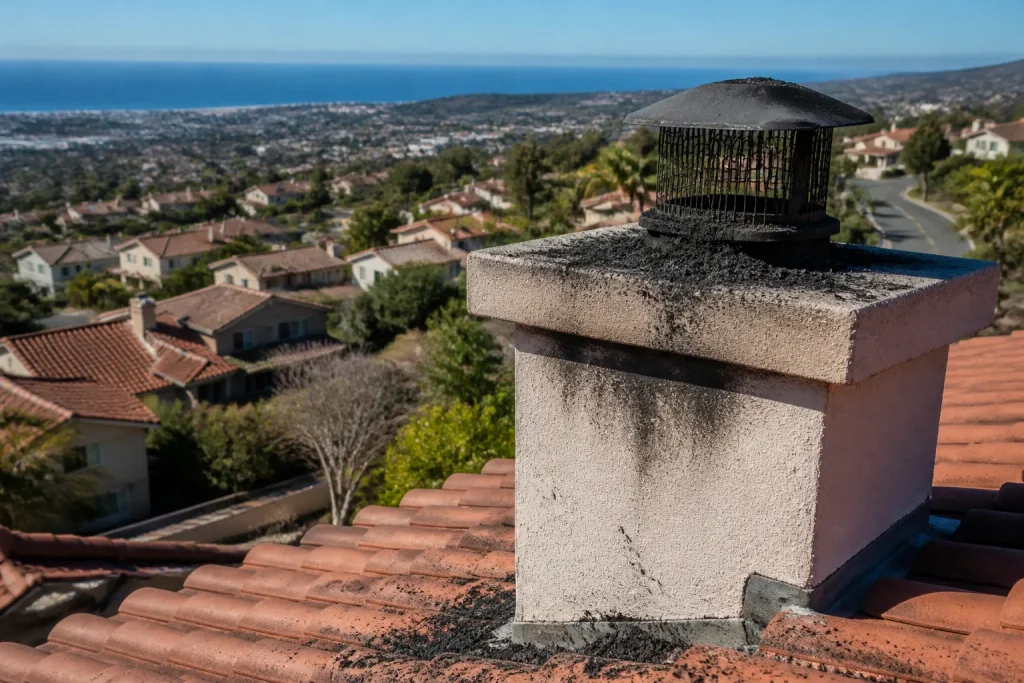
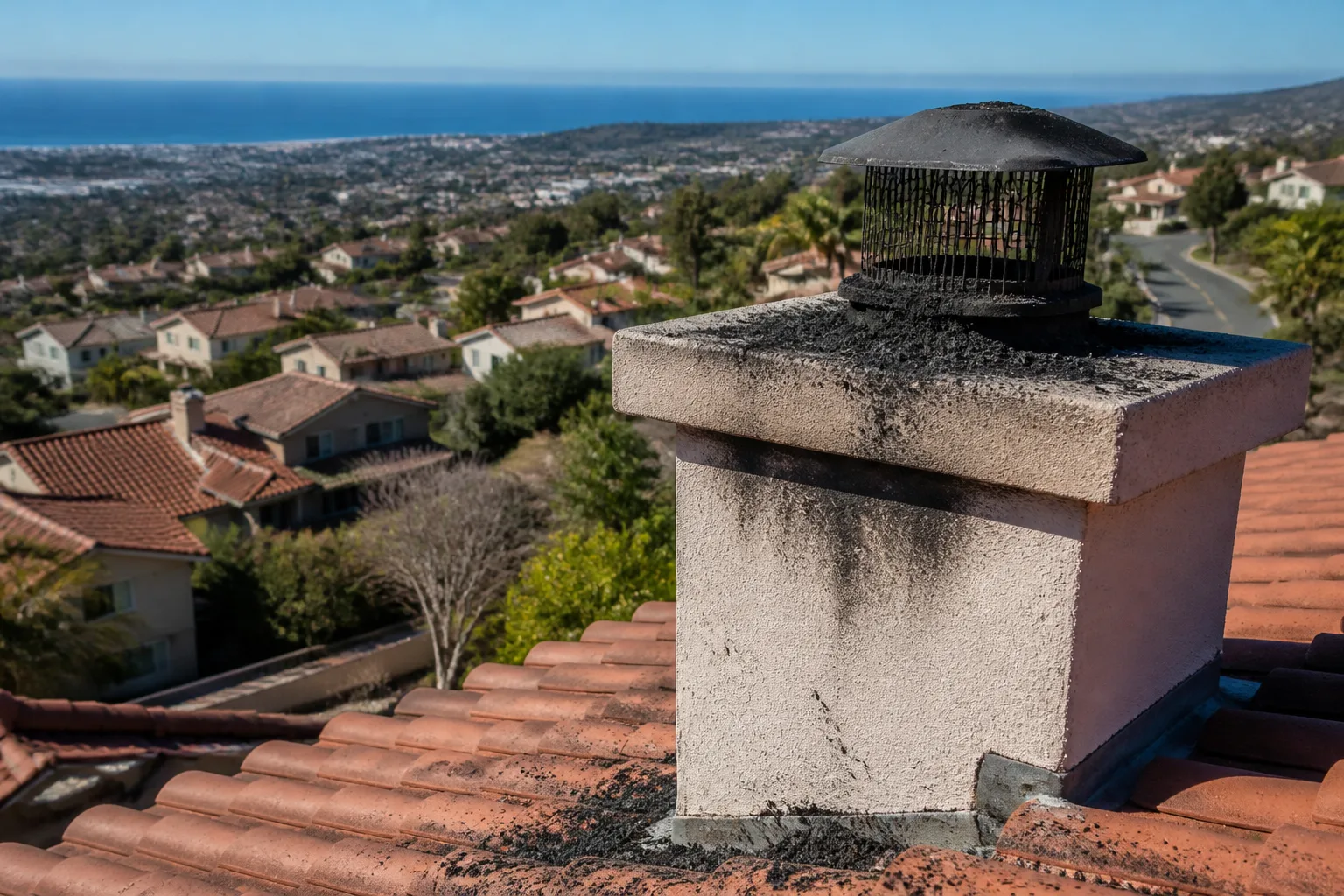
- The cap. Is it present, straight, and intact? A missing, tilted, or rusted-through cap is the most common entry point for water, animals, and debris into a Laguna Niguel chimney. If it’s gone, the flue is wide open to the weather.
- The crown. That’s the concrete or masonry top slab that sheds water away from the flue. Look for cracks, crumbling edges, or a crown that’s pulled away from the flue tile at the center.
- The brickwork. Look for spalling, which is when the face of a brick flakes off or crumbles. Spalling is a structural signal, not just cosmetic, and it usually begins near the top where the chimney takes the most weather.
- The joint lines. Are the mortar joints sharp and intact, or recessed and powdery? Loose joints are where water starts.
If any of those look wrong, that’s the moment to book an inspection rather than a sweep alone. Our technicians have up to 12 years of experience in reading these systems, and we’d much rather see a small problem now than a structural repair later.
When to Call a Pro
Call a professional if you have smoke coming back into the room, animal sounds in the flue, visible efflorescence on the exterior, or a damper that won’t seat. Also call if it’s been more than a year since the last inspection, even if the fireplace gets little use. The annual inspection isn’t a marketing ritual. It’s the only reliable way to see inside the flue without tearing into it. And if you’ve had a bad experience with a handyman who opened the firebox, poked around, and pronounced the chimney “fine,” you’re exactly who we want to talk to. We’ll show you what we find, not just tell you.
Related services in Laguna Niguel: a standard chimney sweep clears soot and creosote, while fireplace repair handles the firebox, damper, and surrounding masonry.
The Bottom Line
The fireplaces that burn the hottest aren’t always the ones that need cleaning first. In Laguna Niguel, the seasonal, low-use chimney is often the one with the most to hide: nesting material, moisture creeping through the crown, a damper with a gap in it, and mortar joints quietly going soft. The good news is that most of these warning signs are visible, and the biggest ones you can check from the ground yourself. The rest take a proper look inside.
If you’re in Laguna Niguel and need help, Laguna Niguel Chimney Sweep Pros offers free estimates. Call (855) 594-8044. We answer 24/7. Fast dispatch from 7am to 7pm, Sunday through Friday.
Our full-service practice covers the whole chimney system, from the firebox to the cap, and we work with professional-grade components from names like DuraFlex and Copperfield because those are the parts chimney pros specify by name. If you’d rather see the whole picture before booking a thing, start with our Laguna Niguel Chimney Sweep Pros page to understand how each service fits together.
Frequently Asked Questions
At least once a year, regardless of how much you burn. Annual inspection catches obstruction, moisture damage, and liner issues that fire frequency has nothing to do with, which is especially true in a lightly used Laguna Niguel fireplace. Call (855) 594-8044 for a free estimate on an inspection.
You need an inspection, and whether you need cleaning depends on what we find inside. Low-use flues accumulate nesting material, moisture, and crumbling mortar rather than creosote, so the risks are different but still real. Nothing gets recommended without a look at the inside of the flue. Call (855) 594-8044 to book an inspection.
Skipped warning signs tend to escalate quietly. Moisture through a cracked crown reaches the flue lining, a blocked flue becomes a fire and carbon monoxide problem the first time the fireplace is used, and a spalling chimney eventually needs structural repair instead of a minor fix. Call (855) 594-8044 for a free estimate before it gets to that point.
A brush on a rod can remove loose soot from the flue, but it can’t tell you whether the liner is cracked, the crown is failing, or a damper is out of alignment. Those are the problems that cause real damage, and a trained professional is the right call for reading them. Call (855) 594-8044. We answer 24/7. Fast dispatch from 7am to 7pm, Sunday through Friday.
Written by the team at Laguna Niguel Chimney Sweep Pros.
Need Chimney Cleaning Help?
Call Laguna Niguel Chimney Sweep Pros - the local pro we connect you with is licensed and insured, with free written estimates in Laguna Niguel.
(855) 594-8044